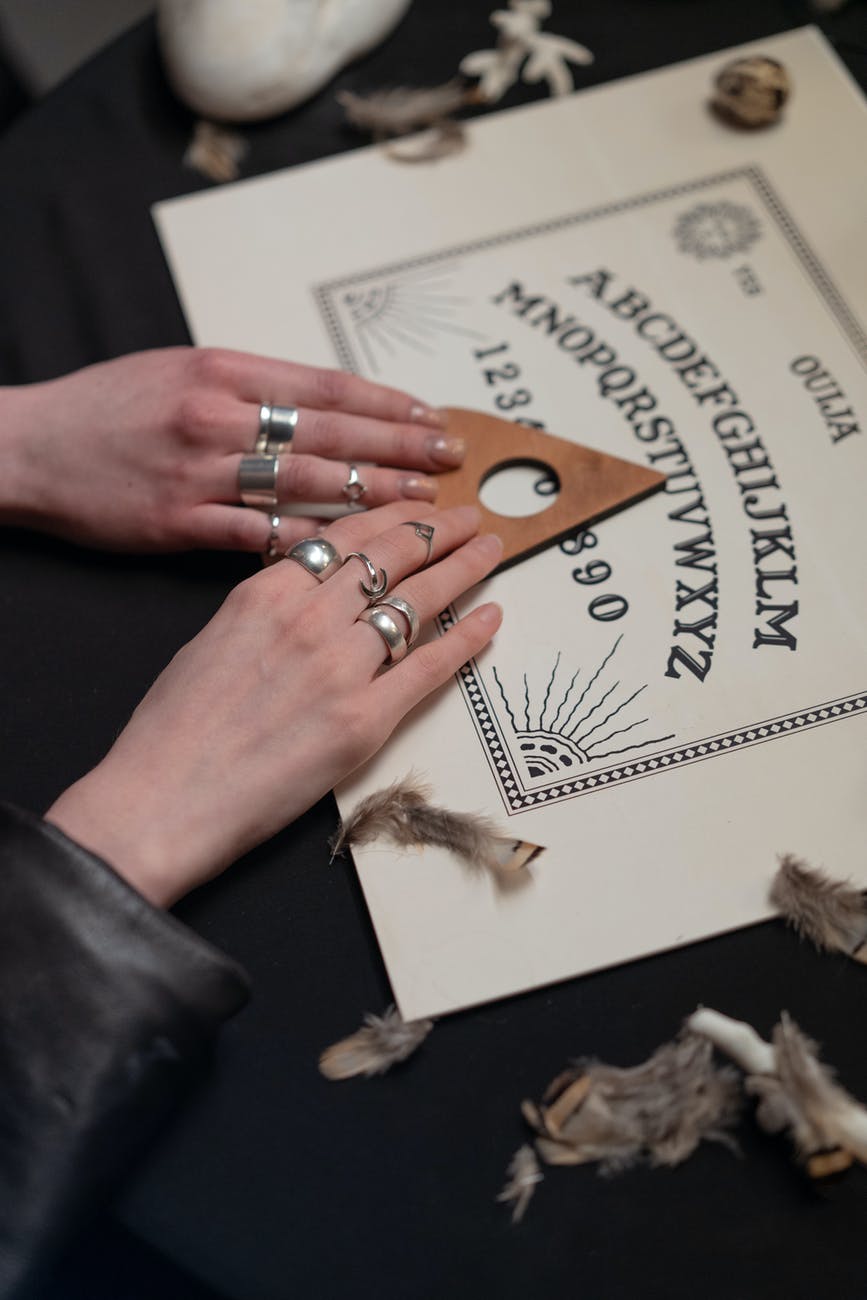
For today’s PAD challenge, I went with the 30/30 prompt “corresponding with ghosts.” Fitting, because today would have been my Mom’s 79th birthday, so ghosts of a sort are on my mind.
I came up with a short poem, inspired by a ouija board, that I might expand on at some point. My one line to share is:
I don’t needa planchette to lead me to you. There are always dreams,
For this year’s poem-a-day challenge, I’m following the 30/30 prompts and writing with my local poetry group, Stroll of Poets.
Today’s prompt comes from Robert Hass’s prose poem, “A Story About the Body.” The idea is to write your own prose poem that, whatever title you choose to give it, is a story about the body. The poem should contain an encounter between two people, some spoken language, and at least one crisp visual image.
I write a lot of prose poetry, so I was excited about this prompt, and it came out rather quickly compared to some poems. I’ve tentatively titled it “It Doesn’t Even Sting” and my one line to share is:
Later, at home, when you’re peeling potatoes for supper, their skins sliding off in elegant curls, falling on your cutting board, you’ll think of the spot again.
Hooray, hooray, it’s the first of…April. Well, in a few hours. I think this is the sixth year I’ve decided to try to write a poem a day for National Poetry Month. However, it’s also one of the busiest Aprils I’ve ever experienced, so the goal to do this and polish (sorta) and post is probably too lofty. I hope to still write something from daily prompts, and will try to post at least a line from the daily work-in-progress as a way to keep myself on track.
What other poem-y things am I up to this month?
From April 22-24, I’ll be taking part in CV2’s 2-Day Poem Contest again. Always SO MUCH fun. If you’re up for it, you can find out more and register here.
The Edmonton Poetry Festival is back, and I am thrilled to be part of the Board this year! Events will run from April 24 through May 1, and I will be hosting a climate crisis workshop and reading on April 30. I’m very excited about that! Details and registration information coming soon.
It’s almost over! Do I write this with happiness or regret? Maybe both. Certainly finding the motivation to write some days this month has been a challenge, but it’s also been a kind of comfort to have a routine, and so many other new poems from others to inspire me.
The final NaPoWriMo.net prompt challenges you to write a poem in the form of a series of directions describing how a person should get to a particular place. It could be a real place, like your local park, or an imaginary or unreal place, like “the bottom of your heart,” or “where missing socks go.” Fill your poem with sensory details, and make them as wild or intimate as you like.
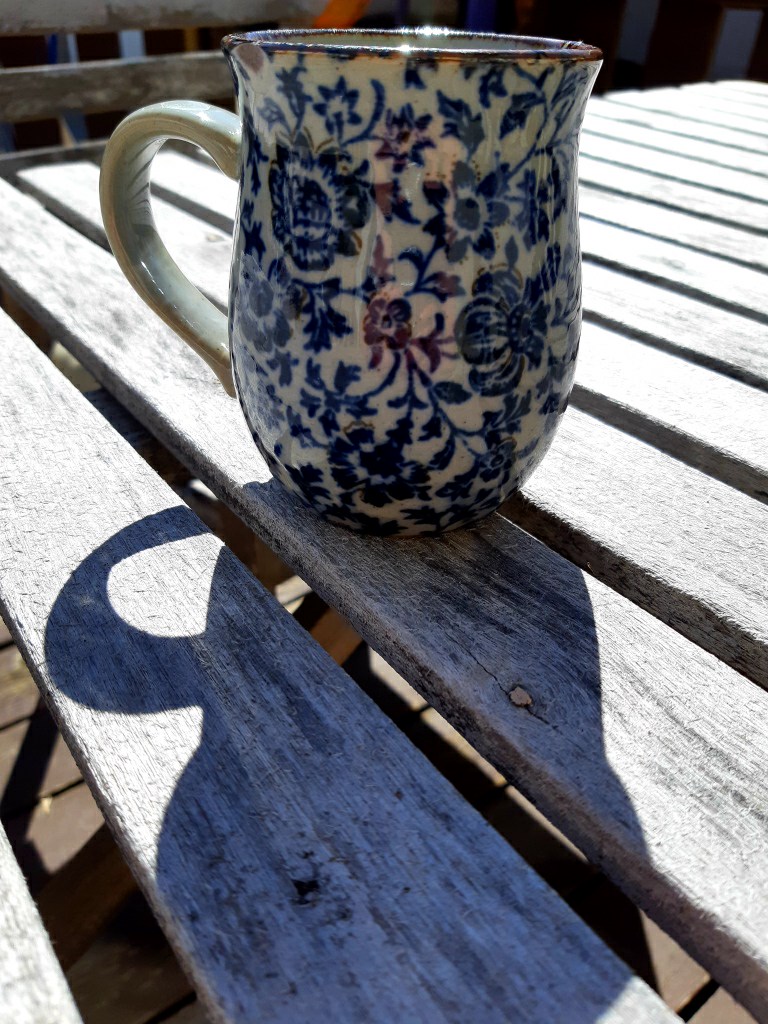
How to Get to the Back Deck to Drink Your Coffee

Never assume a short journey is an easy one.
Begin by preparing for diversions — a phone call you
don’t want to answer; the broken glass you’ll have to carefully
pick up, when a too-quick pivot to answer a child calling
from another room results in an elbow knocking last night’s
wine glass from the counter. Allow time for a loud expletive,
then a sigh. Embrace exasperations that end in small relief.
When it seems there is quiet — a gifted moment when no one
remembers you’re there — pour coffee into your favourite mug,
or your favourite right now, one that knows the shape of your hand.
Take soft steps toward your destination. Watch out for
the squeaky spot between the kitchen and the dining room.
Keep your hip clear of the metal chair, pushed back from the table
after someone’s hurried breakfast, now collecting sun
from the bare window. Casting shadow on an unswept floor.
Turn the lock on the deck door cautiously, with one foot out to
the side, that experienced stance to block escape artist cats.
Open only as wide as is needed for you to slip through. Don’t
pause at the threshold, overcome with birdsong or
the welcome wash of cool air. Just get out there. Sit.
And stay. Even after you’re needed on the inside again.
Stay, sipping hot coffee and staring at clouds.
Let a part of you remain.
It’s the penultimate day of Poetry Month! I think I say that every year on the 29th, mostly because “penultimate” is a fun word. Today’s #NaPoWriMo.net prompt asked for an “in the window” poem. Imagine a window looking into a place or onto a particular scene. It could be your childhood neighbor’s workshop, or a window looking into an alien spaceship. Maybe a window looking into a witch’s gingerbread cottage, or Lord Nelson’s cabin aboard the H.M.S. Victory. What do you see? What’s going on? I decided to look into someplace both completely familiar and always a mystery to me.
Head Windows

I’ve said how I wished
a tiny window existed
just above your right ear,
under a flap of brown hair
that I could part
to peek inside,
so I could see them
forming and burrowing —
your great and terrible thoughts,
your swirling spectrum dreams,
the shy ones that slowly emerge
from shady corners —
but if you had such
a window, wouldn’t I too?
And however would I justify
keeping it permanently
shuttered?
Today’s 30/30 prompt was simply “skyline.” The NaPoWriMo.net prompt asked for a poem that poses a series of questions. The questions could be a mix of the serious (“What is the meaning of life?”) and humorous (“What’s the deal with cats knocking things off tables?”), the interruptive (“Could you repeat that?”) and the conversational (“Are those peanuts? Can I have some?”). I decided, based on my ongoing obsession with the sky and constantly taking photos of it, to combine the two for a super short poem that I could potentially build on later.
5 Questions to Ask The Sky

How does it feel to hold the sun?
Which clouds are the teenagers?
Do you feel less alone after the release of rain?
What’s your favourite song?
Can anything, even blue, really be limitless?
Today’s NaPoWriMo.net prompt challenged writers to create a poem inspired by an entry from the Dictionary of Obscure Sorrows. The entries are very vivid, but the sorrows do have potential to strike a chord, or even get you thinking about defining an in-between, minor, haunting feeling that you have, and that does not yet have a name.
The “sorrow” that first jumped out at me was lachesism. The poem is still a work-in-progress, I think, so I’m not posting. But the definition itself is beautifully crafted.
lachesism

n. the desire to be struck by disaster—to survive a plane crash, to lose everything in a fire, to plunge over a waterfall—which would put a kink in the smooth arc of your life, and forge it into something hardened and flexible and sharp, not just a stiff prefabricated beam that barely covers the gap between one end of your life and the other.
I already wrote a moon poem earlier this month, but to hold true to the poetic stereotype, I have more to say about it. Today I used the 30/30 prompt “concentration moon” to come up with a few quick micros.
meditate
on the full face
of a super moon
but still come up
ordinary

           ***

pandemic thoughts
like phases of the moon
wax wan new repeat

           ***

when I lose
the day’s light
I try to remember
that it’s yet held
by the moon
Today I am preoccupied with trying to complete the CV2 2-Day Poem Contest, so my daily poem is just a super shorty. I used the 30/30 prompt “dark water.”
lake at midnight
so much remains hidden
in it, in you






 makes/me/so/digress